Why Trust Our Tools?
Retirement Planning for Millennials: Turning a Late Start Into a Solid Plan
Plenty of people reach their early 30s with little or nothing saved for retirement, sometimes with student loans or credit card debt on top. Friends who started at 22 seem impossibly far ahead, and retirement calculators feel like a verdict.
A late start is expensive, but it's fixable. Your 30s still leave three decades of compounding, and your peak earning years are usually ahead of you. This guide covers what a late start costs, how to set a target, and the order of accounts that gets the most from every dollar.
Use our retirement calculator to model your own numbers.
What a Late Start Really Costs
Hypothetical example, 7% average annual return:
- Invest $500 a month from 22 to 65: about $1.64 million
- Invest $500 a month from 32 to 65: about $772,000
- To reach the same $1.64 million starting at 32: about $1,060 a month
Waiting ten years roughly doubles the monthly amount needed. That's the price of delay, and it's why the best move is to start now rather than wait until you can save "enough."
Recommended Retirement Planning Books
As an Amazon Associate, we earn from qualifying purchases.
-
The Simple Path to Wealth by JL Collins - A clear case for simple, low-cost index fund investing for retirement.
-
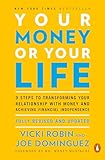
Your Money or Your Life by Vicki Robin - Helps you weigh spending against the hours of your life it costs.
-
Die With Zero by Bill Perkins - The counterbalance to extreme saving. Helps you plan to actually enjoy your money.
-
The Psychology of Money by Morgan Housel - Investor behavior matters as much as investment choice.
Step 1: Calculate Your Retirement Number
A common starting formula: Annual retirement spending × 25
This comes from the "4% rule," based on historical research (the Trinity study and later work) suggesting that withdrawing about 4% of a diversified portfolio in the first year, adjusted for inflation afterward, lasted 30 years in most historical periods. Early retirees with longer horizons often plan for a lower withdrawal rate, such as 3.25-3.5%.
Example:
- Expected annual spending in retirement: $60,000
- Minus expected Social Security (check your estimate at ssa.gov): $20,000
- Amount your portfolio must provide: $40,000
- Target at 4%: $1,000,000
- Target at 3.5%: about $1,140,000
Remember inflation: if retirement is 25 years away, today's $60,000 will cost far more in future dollars. Our retirement calculator and 4% rule calculator help you account for it.
Step 2: Fund Accounts in the Right Order
A common priority list:
- 401(k) up to the full employer match (an instant 50-100% return)
- Pay off high-interest debt (credit cards at 20%+ beat any expected market return)
- HSA, if you have a qualifying high-deductible health plan (tax-deductible, tax-free growth and tax-free withdrawals for medical costs)
- Roth IRA (or a backdoor Roth if your income is above the limit)
- Back to the 401(k) up to the annual limit
- Mega backdoor Roth if your plan allows after-tax contributions
- Taxable brokerage account
Account Notes
401(k): Check whether your plan "trues up" the match before front-loading contributions, and learn your vesting schedule.
Roth IRA: Contributions (not earnings) can be withdrawn anytime, which gives some flexibility. The backdoor Roth works when your income is above the limit, but watch the pro-rata rule if you have pre-tax IRA balances.
HSA: Many people pay current medical bills out of pocket, keep receipts and let the HSA grow. Qualified reimbursements can be taken tax-free later.
Self-employed income: A Solo 401(k) or SEP IRA can shelter a large share of side business profit. See our 401(k) optimization guide.
Step 3: Choose an Asset Allocation
A common glide path (not a rule):
- 20s-30s: 90-100% stocks
- 40s: 80-90% stocks
- 50s: 60-80% stocks, building a bond and cash buffer before retirement
- Retirement: A mix that covers several years of spending in lower-volatility assets
A target-date fund does this automatically. If you build your own, a simple mix of a US total market index, an international index and a bond index is enough.
Why young investors can hold mostly stocks: You have decades to recover from downturns, and bonds alone are unlikely to grow fast enough to reach most retirement goals. The catch: you have to actually hold on during crashes. If a 40% drop would make you sell, choose a more conservative mix you can stick with.
Step 4: Accelerate Your Savings Rate
For late starters, the savings rate matters more than investment selection.
- Increase your 401(k) contribution by 1-2% every year, or turn on automatic escalation
- Send every raise to savings before your lifestyle absorbs it
- Put bonuses, tax refunds and side income straight into retirement accounts
- Consider side income; self-employment income opens additional retirement accounts
Hypothetical: from age 32 to 55 at 7%:
- $1,000 a month grows to about $680,000
- $1,500 a month grows to about $1.02 million
Step 5: Plan for Healthcare Before Medicare
If you want to retire before 65, healthcare is the biggest planning challenge.
Options:
- ACA marketplace plans: Premium tax credits are based on income, which early retirees can partly control by choosing which accounts to draw from
- A spouse's employer plan
- COBRA: Usually 18 months of your old employer coverage, often expensive
- HSA savings to cover deductibles and out-of-pocket costs
Budget for premiums and out-of-pocket costs explicitly in your retirement number.
Alternatives to Full Early Retirement
Coast FIRE: Save aggressively early, then stop contributing and let existing savings grow to your target while you cover current expenses with work. See our Coast FIRE guide.
Barista FIRE: Leave full-time work but keep part-time income (and sometimes benefits) to cover part of your expenses. See our Barista FIRE guide.
Traditional retirement with a head start: Retiring at 60 or 62 instead of 67 is still a big win and needs a much smaller portfolio than retiring at 50.
Common Mistakes
Investing too conservatively when young: Holding mostly cash or bonds for decades makes the goal much harder.
Not understanding vesting: Leaving a job a few months before a vesting date can cost thousands in employer contributions.
Panic selling in a crash: Selling during a downturn locks in losses and often misses the recovery.
Ignoring fees: A 1% higher annual fee can shrink an ending balance by roughly a quarter over a long career.
Cashing out old 401(k)s: Taxes, penalties and lost growth make it one of the costliest moves you can make.
The Psychological Game
Dealing With Comparison
Someone who started at 22 will be ahead of you. That doesn't matter. What matters is your own savings rate and timeline from here.
Balance Matters
A plan so strict that you hate your life isn't sustainable. Decide what you'll protect (health, relationships, a few things you love) and what you'll happily cut (status spending, expensive habits you don't care about).
It Gets Easier
The early years feel slow because contributions do most of the work. As the balance grows, investment returns start to add more each year than you contribute.
Action Plan for Late Starters
If You're 30-35
- Get the full 401(k) match immediately
- Open a Roth IRA and automate contributions
- Aim to save 15-20% of gross income, including any match
- Raise your contribution rate every year
If You're 35-40
- Push toward 20% or more
- Max out tax-advantaged accounts in the priority order above
- Consider side income for additional retirement accounts
- Review your target with a calculator annually
If You're 40+
- Maximize 401(k) and IRA contributions; catch-up contributions start at 50
- Revisit your target retirement age and expected spending honestly
- Check your Social Security estimate and consider how claiming age affects it
- Consider a one-time session with a fee-only fiduciary planner
The Bottom Line
A late start costs money, but it doesn't have to cost you retirement. Capture the match, fund accounts in the right order, keep costs low, raise your savings rate every year and hold steady through downturns. Starting today beats every plan that starts "next year."
This guide is educational and researched from public sources, not personalized financial advice. All projections are hypothetical and assume constant returns that real markets don't deliver.
Ready to plan your retirement? Use our Retirement Calculator to model catch-up scenarios and our Investment Return Calculator to see how contributions grow.
Ready to Take Action?
Use our free calculators to plan your financial future and start building wealth today.
Recommended Finance Books & Tools
As an Amazon Associate, we earn from qualifying purchases.
The Simple Path to Wealth
The #1 FIRE book for beginners
I Will Teach You to Be Rich
Automate your money system
The Psychology of Money
Change how you think about money
Rich Dad Poor Dad
Build assets, reduce liabilities
2026 Budget Planner
Track income and expenses
Financial Calculator
Crunch numbers on the go