Why Trust Our Tools?
The Financial Independence Roadmap
Financial independence (FI) means your investments can cover your living expenses, so work becomes optional. You can start the path from any point, including negative net worth, with student loans and credit card debt. What matters is the order of operations and, above all, your savings rate.
Use our FIRE calculator to estimate your own timeline.
Recommended FIRE Books
As an Amazon Associate, we earn from qualifying purchases at no extra cost to you.
These books shaped the modern FI movement:
-
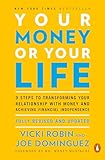
Your Money or Your Life by Vicki Robin - A foundational FIRE book. Reframes money as life energy. An essential starting point.
-
The Simple Path to Wealth by JL Collins - Stock market investing made simple, with his well-known "F-you money" philosophy.
-
Die With Zero by Bill Perkins - The counterbalance to extreme frugality. Helps you optimize life experiences, not just portfolio size.
-
I Will Teach You to Be Rich by Ramit Sethi - Practical money systems for automation and a "spend extravagantly on what you love" approach.
-
The Psychology of Money by Morgan Housel - The emotional side of wealth building.
Step 1: Calculate Your FI Number
FI number = annual expenses × 25
This comes from the 4% rule: historical research suggests a diversified portfolio has usually supported inflation-adjusted withdrawals of about 4% of the starting balance for 30 years. Early retirees planning for 40-50 years often use 3.25-3.5% (a multiple of about 28-30).
Example:
- Annual expenses: $48,000
- FI number at 4%: $1,200,000
- FI number at 3.5%: about $1,370,000
Track your real spending for a few months before setting this number. Include healthcare, taxes on withdrawals and irregular costs like car replacement and home repairs.
Step 2: Understand Why Savings Rate Matters Most
Your savings rate affects both sides of the equation: how much you invest and how much you need.
Approximate years to FI starting from zero (assumes a 5% return after inflation and a 4% withdrawal rate):
- 10% savings rate: about 52 years
- 20% savings rate: about 37 years
- 30% savings rate: about 28 years
- 40% savings rate: about 22 years
- 50% savings rate: about 17 years
- 60% savings rate: about 13 years
- 70% savings rate: about 9 years
These are simplified illustrations. Real returns vary, and sequence of returns matters. But the pattern holds: raising your savings rate from 10% to 30% can cut decades from the timeline.
Step 3: Follow the Order of Operations
Phase 1: Stabilize (If You're Starting Below Zero)
- Build a starter emergency fund (about $1,000 to one month of expenses)
- Get your full employer 401(k) match
- Pay off high-interest debt (credit cards, personal loans) using the avalanche or snowball method (see our debt-free guide)
Phase 2: Build the Foundation
- Finish a full emergency fund (3-6+ months of expenses)
- Max out tax-advantaged accounts: HSA, Roth or traditional IRA, and 401(k)
- Decide how to handle lower-interest debt (student loans, mortgage) versus investing
Phase 3: Accelerate
- Increase income: raises, job changes, certifications, side income
- Keep lifestyle growth well below income growth
- Invest the difference in low-cost, diversified index funds
- Use a taxable brokerage account once tax-advantaged space is full
Step 4: Increase Income
For many people, income growth drives FI faster than cutting expenses once the big costs are under control.
- Negotiate at every review and when changing jobs
- Build skills and certifications that raise your market value
- Consider a side business (see our side hustle guide)
- Save most of every raise
Step 5: Invest Simply
- Low-cost index funds (total US market, international, bonds) or a target-date fund
- Automate contributions every payday
- Rebalance once or twice a year
- Ignore market noise
Milestones Worth Celebrating
- Net worth of $0: You own more than you owe
- One year of expenses invested
- $100,000 invested: Compounding starts to feel real; many find the next $100,000 comes faster
- Coast FI: Your investments could grow to your FI number by traditional retirement age without new contributions
- Half your FI number
- FI
Strategies That Accelerate FI
The Three-Bucket Approach
- Short-term: Emergency fund in high-yield savings
- Medium-term: Savings for known goals (car, home) in safer assets
- Long-term: Retirement and FI investments in stocks
Keep Big Expenses Low
Housing, transportation and food usually account for most spending. See our frugal living guide and house hacking guide.
Tax Efficiency
Tax-advantaged accounts, asset location and, for early retirees, strategies like a Roth conversion ladder can reduce lifetime taxes. See our tax optimization guide.
Common Setbacks and How to Handle Them
Speculative losses: Chasing crypto or hot stocks with money meant for FI can erase years of progress. Keep speculation to a small, fixed slice or skip it.
Lifestyle inflation: Raises disappear into bigger houses and cars. Decide in advance what share of each raise you'll save.
Emergencies: Job loss or medical bills can force you to pause. That's what the emergency fund is for. Rebuild it, then resume.
Market crashes: Your portfolio will fall 30% or more at some point. Keep investing and don't sell.
The Psychology of FI
Dealing With Doubt
Progress is slow at first. Track net worth monthly or quarterly so you can see the trend, not the daily noise.
Social Pressure
Friends may not understand your choices. Find a community of people on a similar path, and keep spending on the things that genuinely matter to you.
Avoiding Burnout
A plan that makes you miserable for 15 years isn't a good plan. Build in spending that makes life better today.
Alternative FI Paths
Lean FIRE: FI on a smaller budget, often by living in a lower-cost area. See our Lean FIRE guide.
Fat FIRE: FI with a larger budget, which needs a much larger portfolio. See our Fat FIRE guide.
Coast FIRE: Reach a balance that can grow to your target on its own, then work only enough to cover current expenses. See our Coast FIRE guide.
Barista FIRE: Leave full-time work but keep part-time income. See our Barista FIRE guide.
Plan for Life After FI
- Healthcare before Medicare: ACA marketplace plans, a spouse's plan or part-time work with benefits
- Withdrawal strategy: Which accounts to draw from first, and how to access retirement accounts before 59½ (Roth contribution withdrawals, Roth conversion ladders, 72(t) payments or the Rule of 55 for 401(k)s when you leave a job at 55 or older)
- Purpose: Many people who reach FI keep working on things they enjoy; FI is about choice
Building Your FI Roadmap
- Calculate your FI number from your real expenses
- Calculate your savings rate (savings ÷ take-home pay)
- Estimate your timeline with our FIRE calculator
- Follow the order of operations above
- Track net worth monthly or quarterly
- Raise your savings rate a little every year
The Bottom Line
Financial independence isn't reserved for high earners or people who started early. It comes from a high savings rate sustained over time, low-cost investing and avoiding big mistakes. Start where you are, follow the order of operations and let compounding do the heavy lifting.
This guide is educational and researched from public sources, not personalized financial advice. Projections are hypothetical.
Ready to map your path? Use our FIRE Calculator to calculate your FI number and timeline, and our Retirement Calculator to model different scenarios.
Ready to Take Action?
Use our free calculators to plan your financial future and start building wealth today.
Recommended Finance Books & Tools
As an Amazon Associate, we earn from qualifying purchases.
The Simple Path to Wealth
The #1 FIRE book for beginners
I Will Teach You to Be Rich
Automate your money system
The Psychology of Money
Change how you think about money
Rich Dad Poor Dad
Build assets, reduce liabilities
2026 Budget Planner
Track income and expenses
Financial Calculator
Crunch numbers on the go